Choosing a content management system (CMS) used to be a binary choice: you either hired a developer to build a custom solution or you installed WordPress.
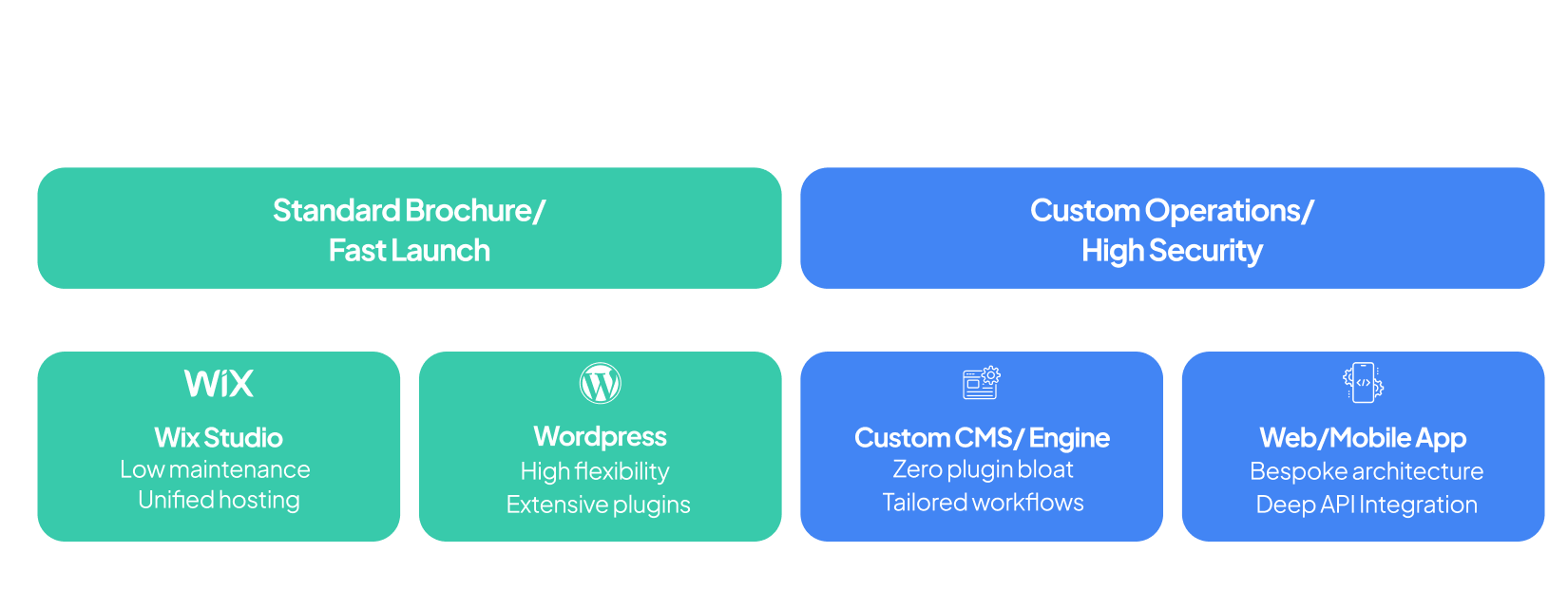
Today, the digital ecosystem is far more nuanced. Modern website builders like Wix Studio have evolved into capable tools for agency workflows, WordPress continues to power over 40% of the web, and custom CMS engines offer tailored performance and security for scaling enterprises.
The challenge for business leaders, marketing directors, and product owners isn’t finding a "good" platform - it’s finding the right architecture for their current stage of growth.
Selecting the wrong platform leads to friction: smaller businesses can end up overwhelmed by unnecessary technical overhead, while scaling brands frequently find themselves constrained by off-the-shelf templates and bloated code.
Here is an objective guide to help you evaluate WordPress, Wix Studio, and Custom CMS platforms based on business scale, security requirements, and long-term goals.
1. Wix Studio: Rapid Deployment & Visual Flexibility
Best for: Early-stage businesses, boutique brands, rapid-turnaround brochure sites, and teams looking for low ongoing maintenance.
Wix Studio represents a significant step forward from traditional drag-and-drop website builders. Built specifically for agencies and design-led businesses, it provides advanced CSS controls, custom animations, and collaborative workspaces without requiring a heavy back-end development stack.
Key Advantages
- Unified Hosting & Maintenance: Hosting, security patches, and platform updates are fully managed at the platform level, eliminating routine maintenance overhead.
- Rapid Prototyping to Launch: Designs can be translated into live, responsive pages quickly, reducing time-to-market.
- Integrated Tooling: Out-of-the-box support for basic booking systems, e-commerce, and content databases without requiring third-party plugins.
Considerations at Scale
- Ecosystem Locks: You are building within a proprietary ecosystem. Migrating your layout, database, or code off Wix in the future requires a complete rebuild.
- Custom Code Limits: While Wix Studio supports custom JavaScript (Velo) and external API connections, complex back-end logic, bespoke database structures, or deep enterprise integrations can quickly become difficult to maintain.
2. WordPress: The Flexible Industry Standard
Best for: Content-heavy sites, mid-market businesses needing extensive third-party integrations, and teams with established digital support.
WordPress remains the dominant CMS globally for good reason: its open-source nature means near-limitless flexibility and an unmatched ecosystem of plugins, themes, and developer talent.
Key Advantages
- Total Ownership & Control: As open-source software, you own your code and database entirely. You can host it on any server and customise every line of code.
- Extensive Ecosystem: Whether you need CRM connectivity, multi-language support, or advanced SEO tools, there is almost certainly an existing plugin or library available.
- Content Management: Its native publishing tools excel at handling large volumes of blogs, news articles, and structured content resources.
Considerations at Scale
- Maintenance & Security Overhead: Because WordPress powers such a large share of the web, it is a primary target for automated security exploits. Keeping core software, themes, and dozens of plugins updated and compatible requires consistent, active management.
- Code Bloat & Core Web Vitals: Combining third-party themes and multiple plugins often introduces redundant code. Without active optimisation by senior developers, site speed and Google Core Web Vitals performance can suffer.
3. Custom CMS Architecture (e.g. Engine CMS): Performance, Security & Tailored Workflows
Best for: Established corporate brands, complex web apps, companies with strict compliance standards, and businesses where digital performance directly drives core revenue.
A bespoke or tailored CMS (such as Melon's proprietary Engine CMS) strips away the unnecessary clutter of mass-market platforms. Instead of fitting your content and operations into a pre-existing template framework, the software is built specifically around your brand’s exact operational workflow.
Key Advantages
- Zero Plugin Bloat & Peak Speed: Custom platforms render only the exact code required for your site. The result is lightning-fast page loading times, superior Core Web Vitals scores, and clean SEO architecture out of the box.
- Enhanced Security Profile: By eliminating third-party plugin dependencies, you remove the primary entry point for web vulnerabilities. This makes custom setups ideal for financial, healthcare, or corporate platforms subject to strict compliance rules.
- Distraction-Free Admin Experience: Instead of navigating bloated admin dashboards filled with unwanted plugin notifications and complex settings, your content team gets a streamlined interface tailored strictly to their publishing needs.
Considerations at Scale
- Upfront Investment: Bespoke software requires dedicated engineering, strategic UX design, and thorough QA testing, making the initial investment higher than off-the-shelf options.
- Partner Alignment: You rely on a specialized technical agency or internal engineering team to extend core features over time, making it essential to choose a long-term partner rather than a transactional vendor.
Platform Comparison Matrix
|
Feature / Metric |
Wix Studio |
WordPress |
|
|
Primary Focus |
Rapid design & managed hosting |
Content depth & plugin ecosystem |
Speed, security & bespoke workflows |
|
Upfront Cost |
Low to Moderate |
Moderate |
Higher strategic investment |
|
Ongoing Maintenance |
Minimal (Managed) |
Requires routine updates/patches |
Minimal (Stable, clean architecture) |
|
Page Speed Potential |
Good |
Variable (Requires optimisation) |
Exceptional (Zero code bloat) |
|
Security Risk Profile |
Low (Sandboxed) |
High (Vulnerable via 3rd-party plugins) |
Very Low (No 3rd-party plugin exposure) |
|
Custom Integration Depth |
Moderate (API-dependent) |
High (Plugin/Custom PHP) |
Infinite (Built to suit exact stack) |
The Decision Framework: How to Choose
When deciding which route to take for your next web project, consider these four questions:
- What is your internal maintenance capability? If you lack dedicated technical resource and want an all-in-one managed platform, Wix Studio offers peace of mind.
- Do you rely on niche third-party tools? If your marketing strategy relies on connecting off-the-shelf plugins for specific business tasks, WordPress provides a massive library of ready-built solutions.
- Is page speed, security, or custom design a key differentiator? If slow load times lose high-value corporate clients, or if your platform handles sensitive data or complex API workflows, a Custom CMS offers superior performance and protection.
- Where is your business heading over the next 3 to 5 years? Choose a technology stack that supports your future goals. Upgrading your platform should be a deliberate, strategic step as your digital footprint matures, not an emergency fix for broken plugins or rigid templates.
Need Guidance on Your Digital Architecture?
At Melon, we don't believe in one-size-fits-all web development. Whether you need an agile web presence, a scalable WordPress integration, or a high-performance custom application powered by Engine CMS, our team helps you select and build the exact technology stack your business needs to grow.
Get in touch with the team to discuss your upcoming web project.